Jump to your guide
Most people don’t know what they qualify for because no one takes the time to explain it properly. Download my free, plain-English loan guides below to learn what options are available to you.
Here are the questions I get the most from new clients.
A bank can only offer its own loans. As a broker, I compare loans from 100+ lenders, so I can match the loan to your situation instead of fitting you into one bank’s box.
A pre-qualification is a quick estimate of what you may be able to borrow, usually based on information you share with me. A pre-approval goes further: I review your credit, income, assets and debts using your actual documents, so the number is far more reliable. Sellers and agents take a pre-approval more seriously, which makes your offer stronger.
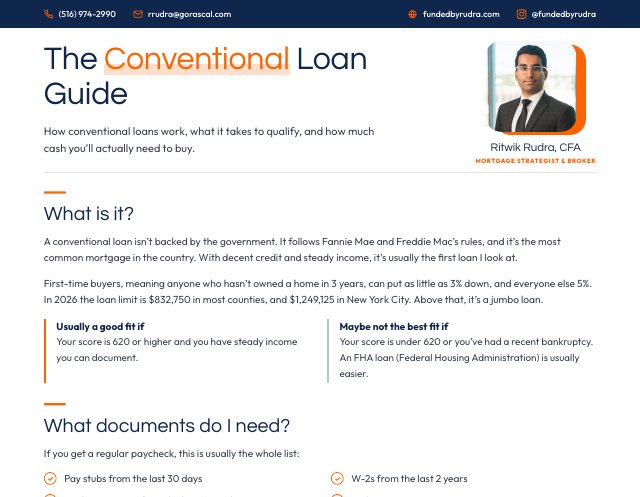
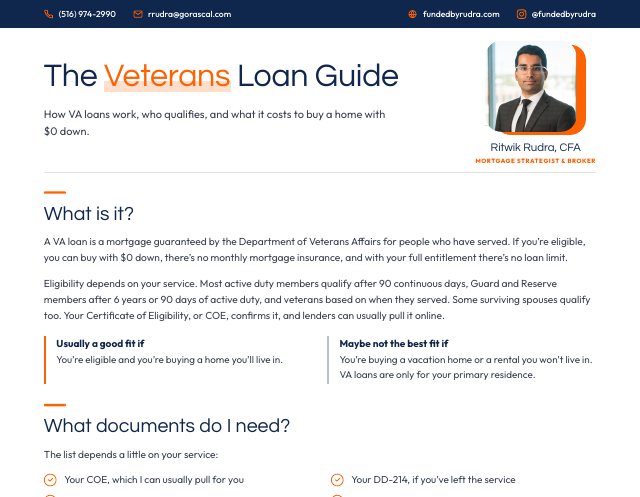
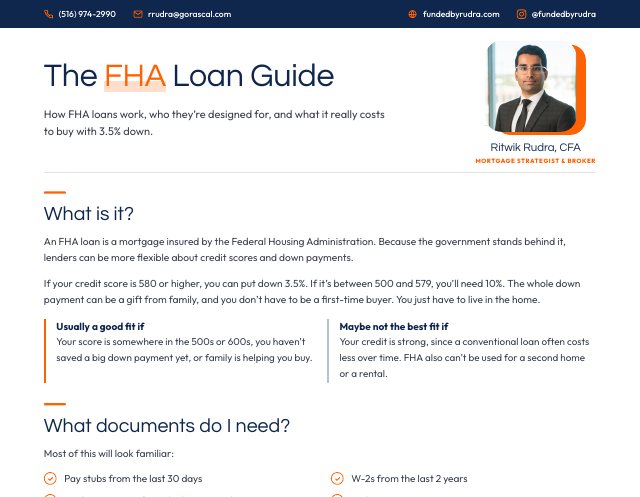
Plan for two things: your down payment and your closing costs. The down payment can be much lower than the 20% most people assume. FHA loans allow 3.5% down with a 580+ credit score, conventional loans can be done with 5% down, and VA loans allow 0% down for eligible veterans and service members. Investment property loans like DSCR can be done with 20% down. Closing costs usually run about 2% to 5% of the purchase price, and seller credits or lender credits can sometimes offset them.
It depends on the loan:
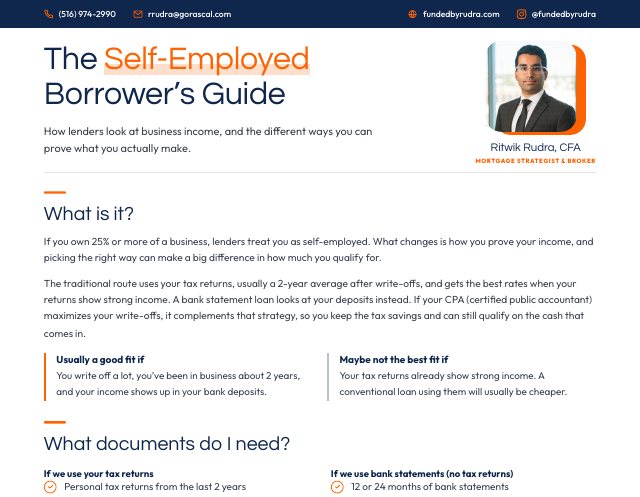
Yes! Traditional conventional loans need 2 years of personal and business tax returns, which can significantly hurt self-employed borrowers who use write-offs.
Instead, we can use bank statement programs to qualify your income on the last 12 or 24 months of bank deposits instead of tax returns.
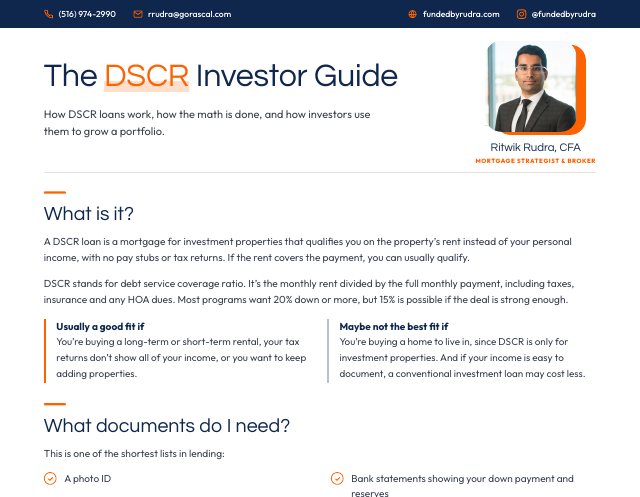
A DSCR loan is built for real estate investors and is based on the rental income of the property instead of any of your personal income or tax returns.
We can use in-place rents or get an appraisal of market rents ordered to estimate the income potential of a property.
Points are an upfront fee you pay at closing to lower your interest rate. One point equals 1% of your loan amount, so 1 point on a $400,000 loan is $4,000. Points make sense when you plan to keep the loan long enough for the monthly savings to pay back the upfront costs.
Keep your finances as boring and steady as possible until you close! Don’t open new credit cards or loans, don’t finance a car or furniture, don’t change jobs, and don’t make large deposits you can’t document. Lenders recheck your credit and finances right before closing, so a change can delay or even derail your loan!